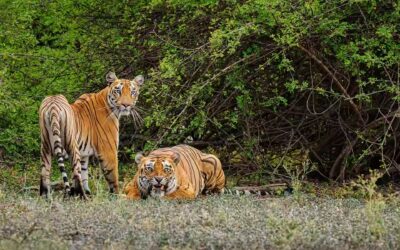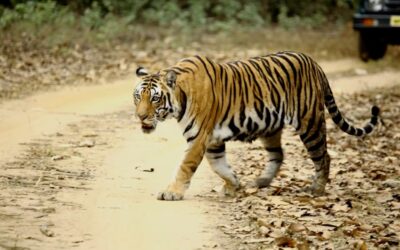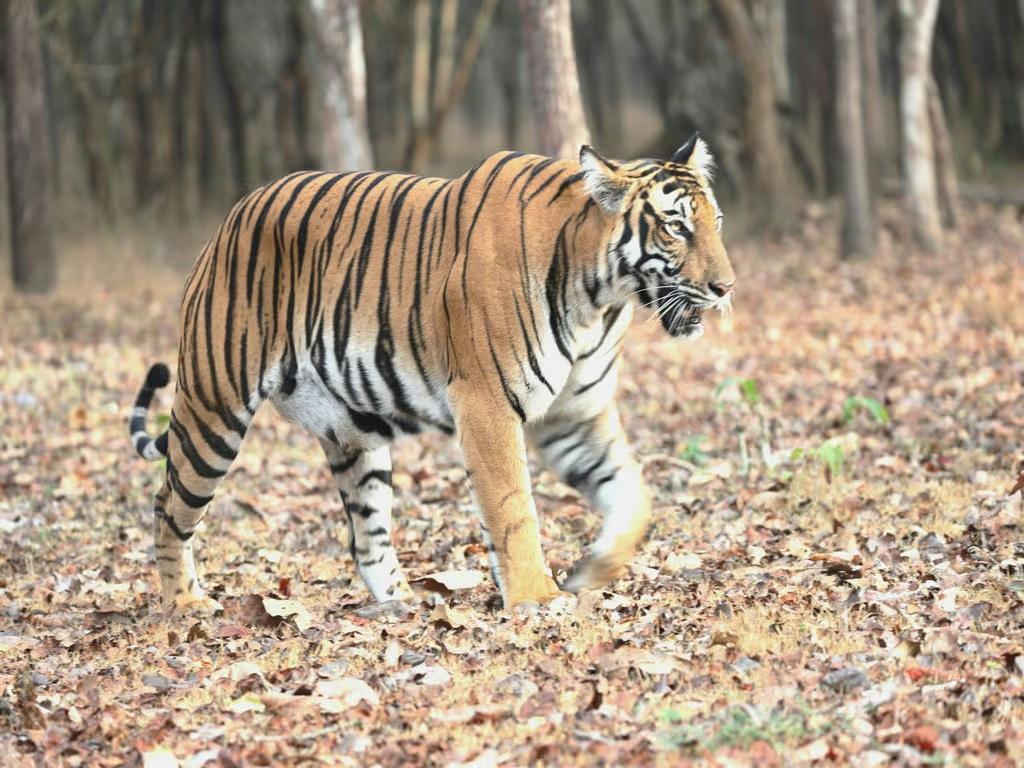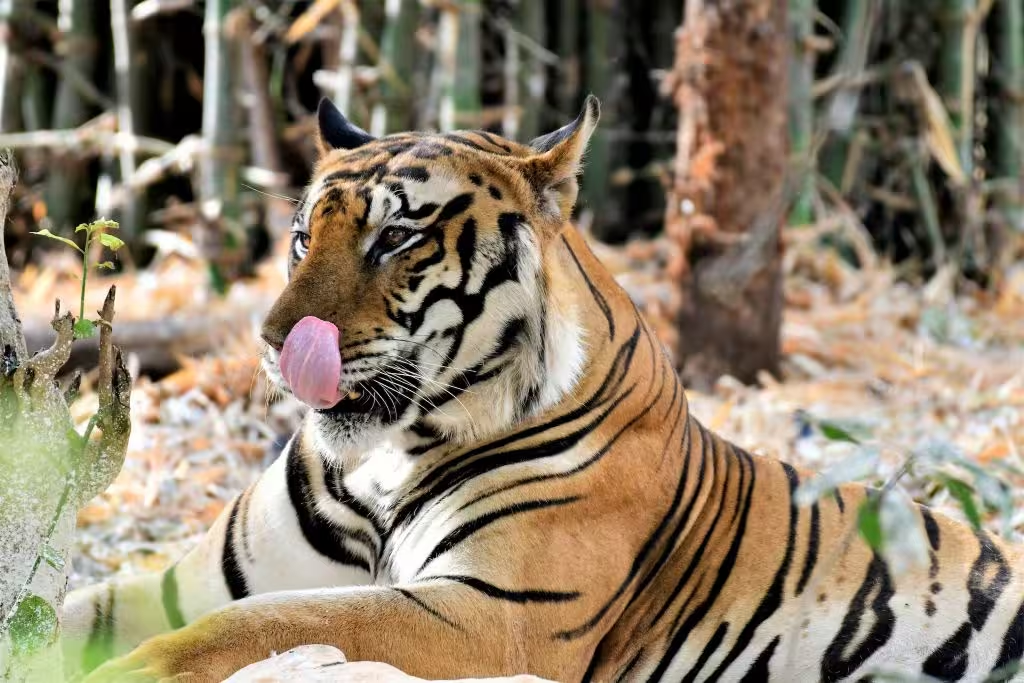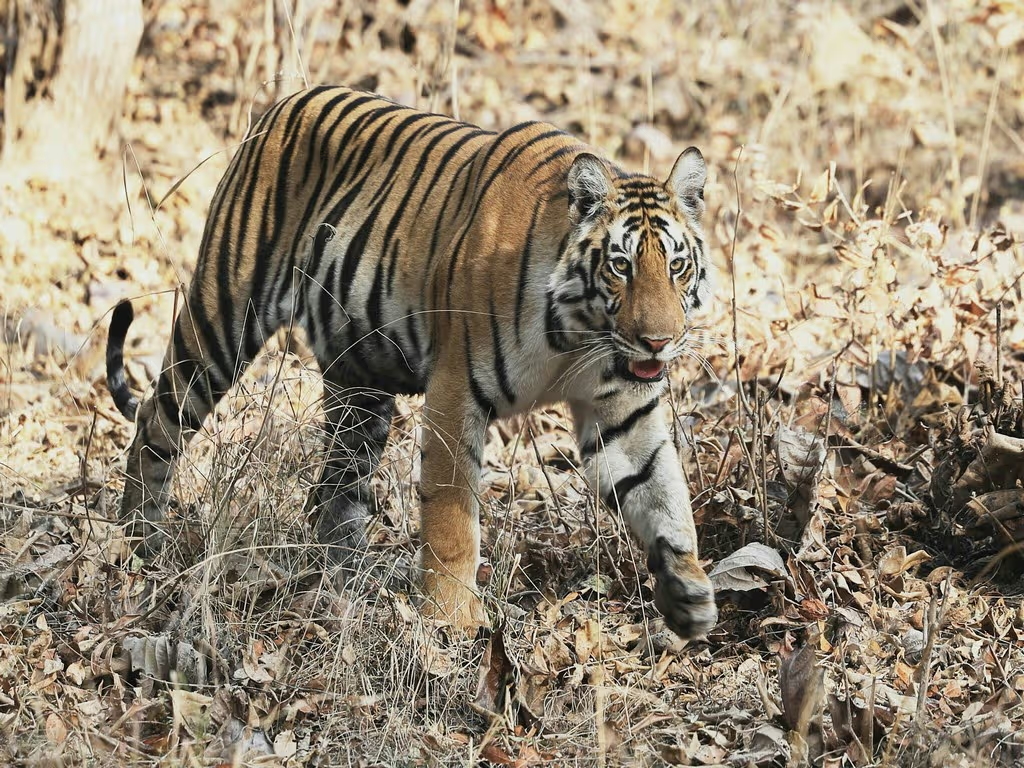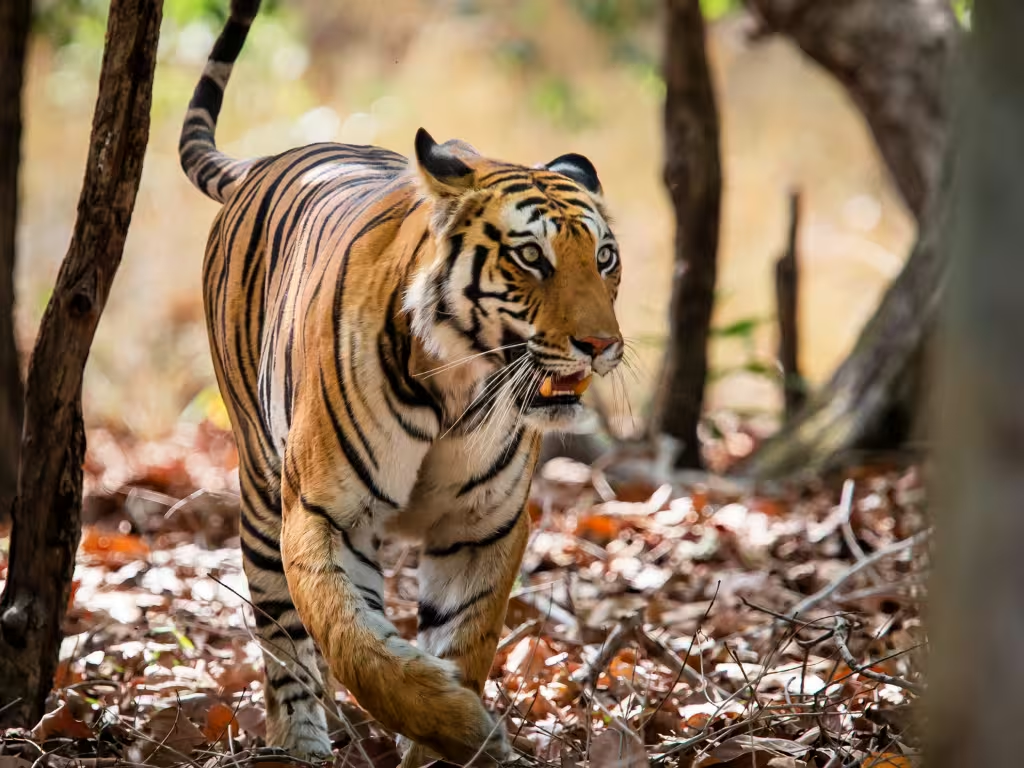
Panna National Park in Madhya Pradesh is most often discussed in the context of its tiger recovery story, and understandably so. However, reducing Panna to a single species does a disservice to one of central India’s most ecologically layered reserves. The park covers roughly 542 square kilometres of dry deciduous forest, Ken River gorges, and grassland patches that together support a remarkable range of wildlife – much of it overlooked by visitors focused entirely on tiger sightings.
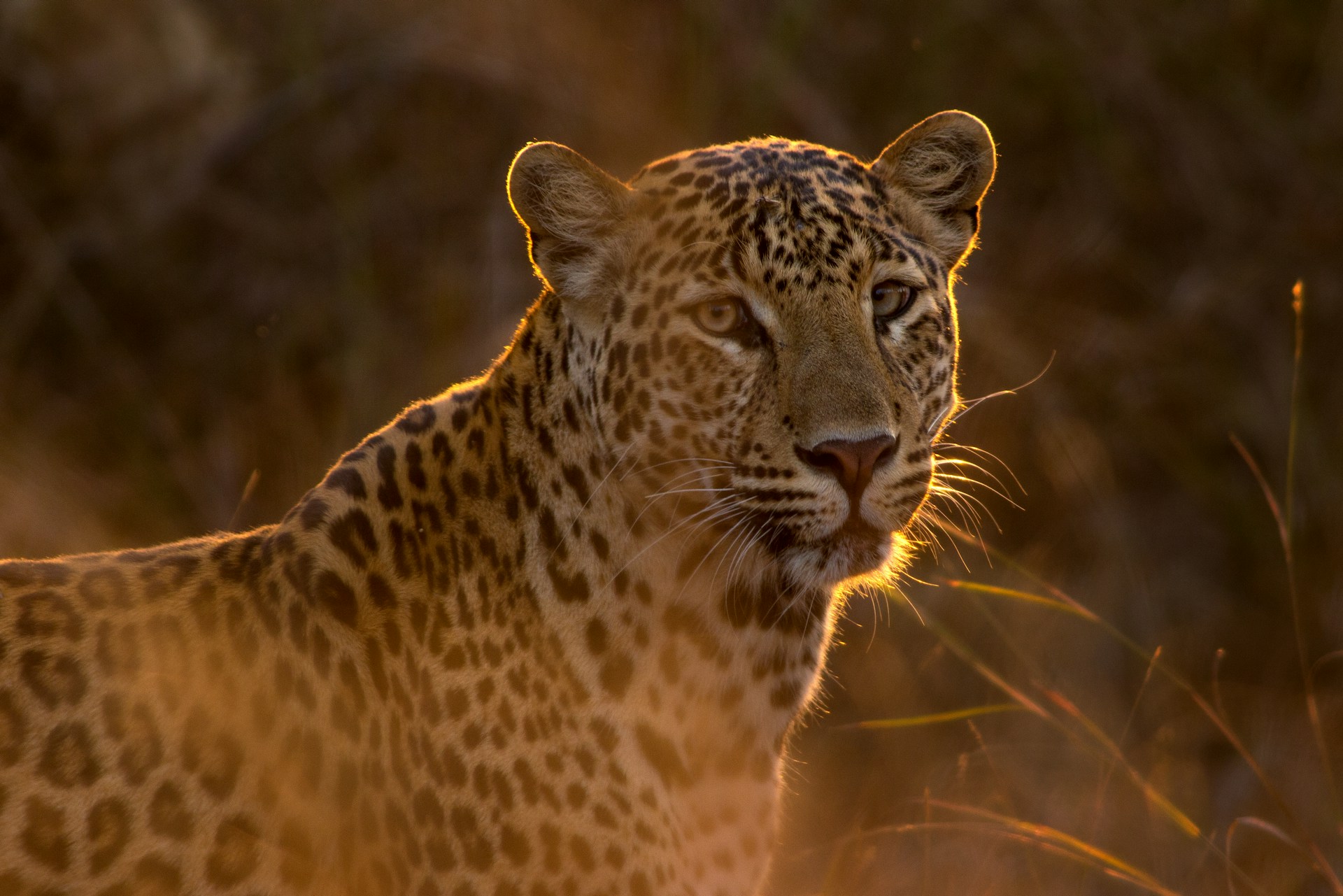
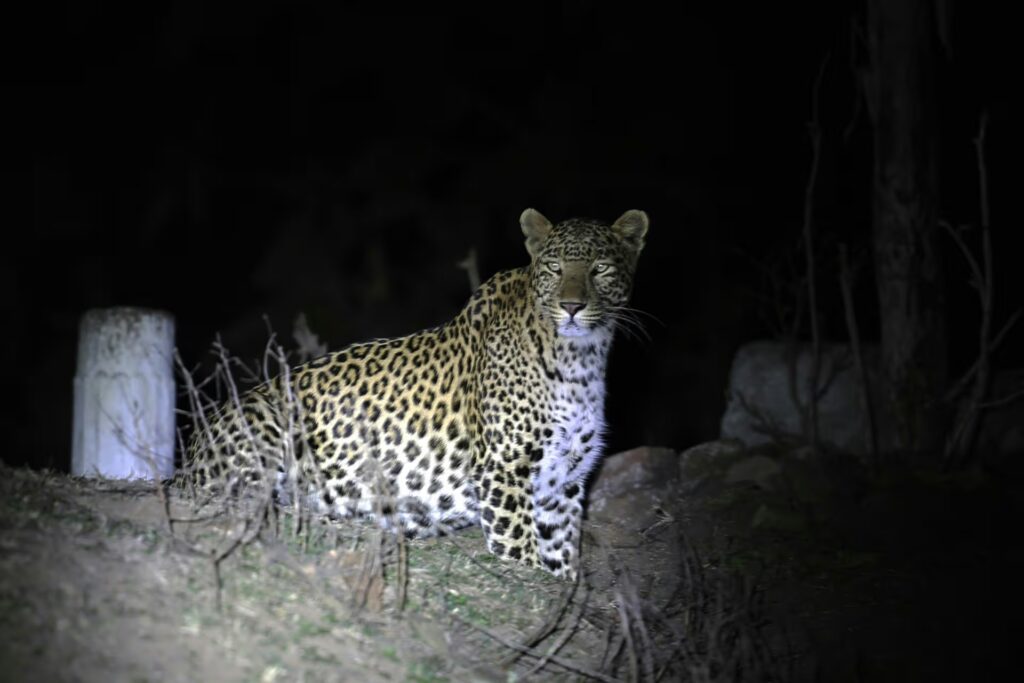
Leopard – The More Consistently Seen Big Cat
While tigers attract the headlines, leopards are actually sighted with greater frequency in Panna. They are more adaptable, more numerous within the park, and comfortable across a wider range of terrain – from rocky outcrops near the Ken River to dense forest interiors. Early morning drives along the Hinauta and Madla zones offer reasonable leopard sighting opportunities. Unlike tigers, leopards in Panna are not always tracked by radio collar data, which means sightings are less predictable but feel genuinely wild when they occur.
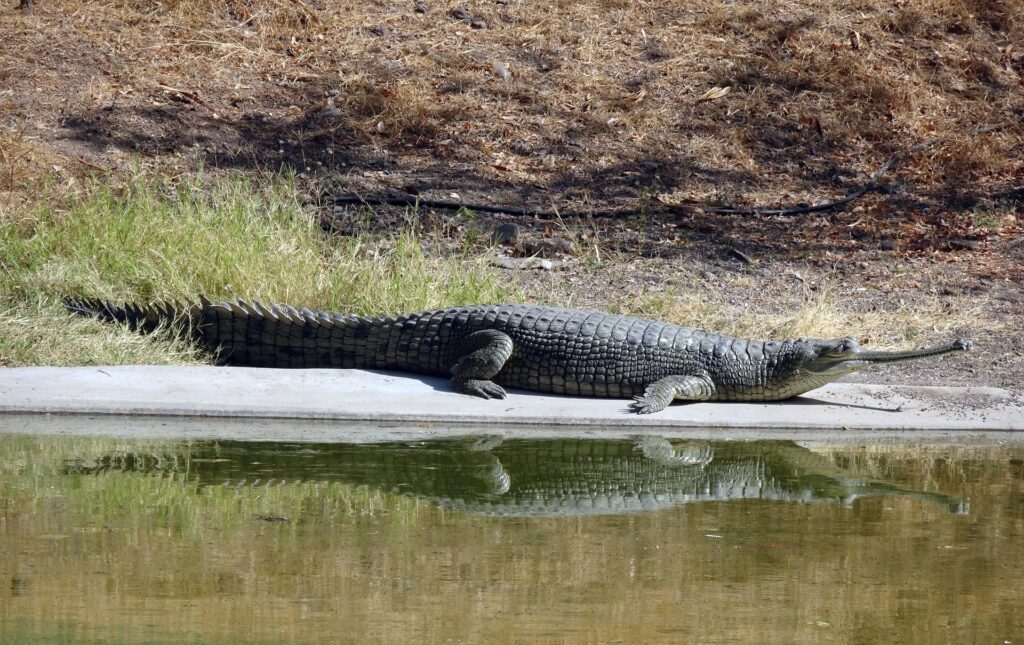
Gharial – A Critically Endangered Reptile in Recovery
The Ken River flowing through Panna is one of the last viable habitats for the Gharial (Gavialis gangeticus), classified as Critically Endangered on the IUCN Red List. These long-snouted, fish-eating crocodilians have made a partial recovery in the Ken thanks to active conservation programs. Boat safaris on the Ken River offer the best viewing – gharials are most visible basking on sandbanks during the cooler morning hours between October and March. This sighting alone justifies a visit to Panna for wildlife enthusiasts who look beyond the standard mammal checklist.
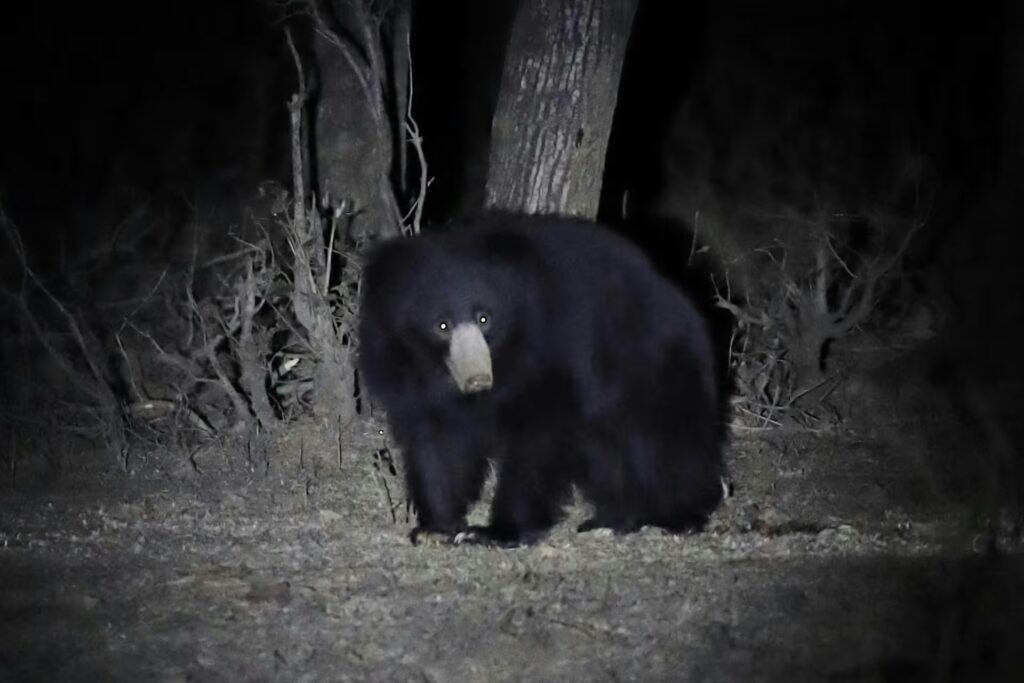
Sloth Bear – Unpredictable and Worth the Wait
Sloth bears are present throughout Panna but are notoriously difficult to find on a standard safari. They are solitary, largely nocturnal, and tend to avoid open terrain. Sightings typically happen by chance – often near mahua trees during flowering season or around termite mounds in dry forest patches. The best time to improve odds is during the warmer months between March and May when food availability influences movement patterns. Encounters are brief and unscripted, which makes them memorable in a way that more predictable sightings rarely are.
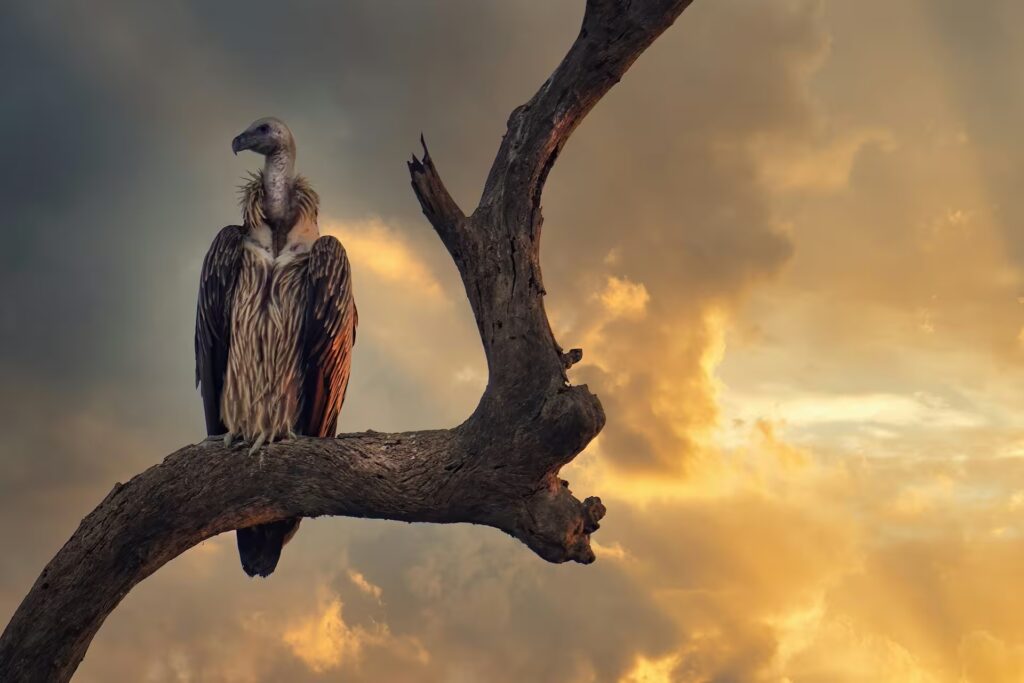
Indian Vulture and Cliff-Nesting Raptors
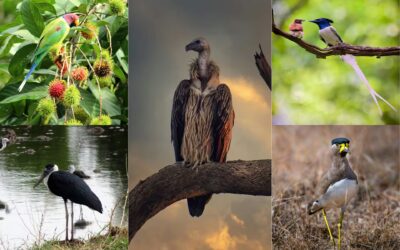
The Ken River gorge creates dramatic cliff faces that serve as nesting grounds for Indian Vultures (Gyps indicus), a species classified as Critically Endangered. Panna is considered one of the more important remaining strongholds for this species in Madhya Pradesh. Beyond vultures, the gorge attracts Indian Skimmers, Ospreys, and Pied Kingfishers along the riverbanks. Birdwatchers who time a boat safari on the Ken River alongside a morning game drive can cover significant ground in terms of species diversity within a single day.
Chinkara and Four-Horned Antelope
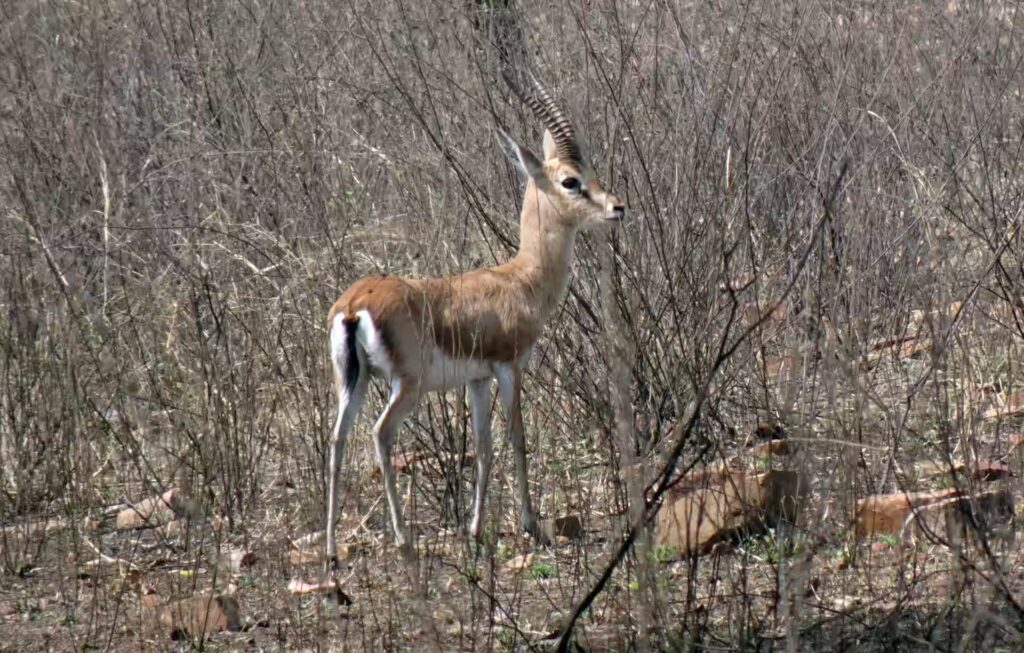
The open grassland patches and forest edges of Panna support two antelope species that are easy to miss if you are scanning only for large predators. The Chinkara (Indian Gazelle) is a slender, alert animal frequently seen near the boundaries of dry scrub and open ground. The Four-Horned Antelope (Tetracerus quadricornis) – locally known as Chousingha – is the world’s only four-horned bovid and is classified as Vulnerable. It favors broken terrain with mixed cover and is most active in the early morning. Panna holds a reasonably healthy population relative to many other central Indian forests.
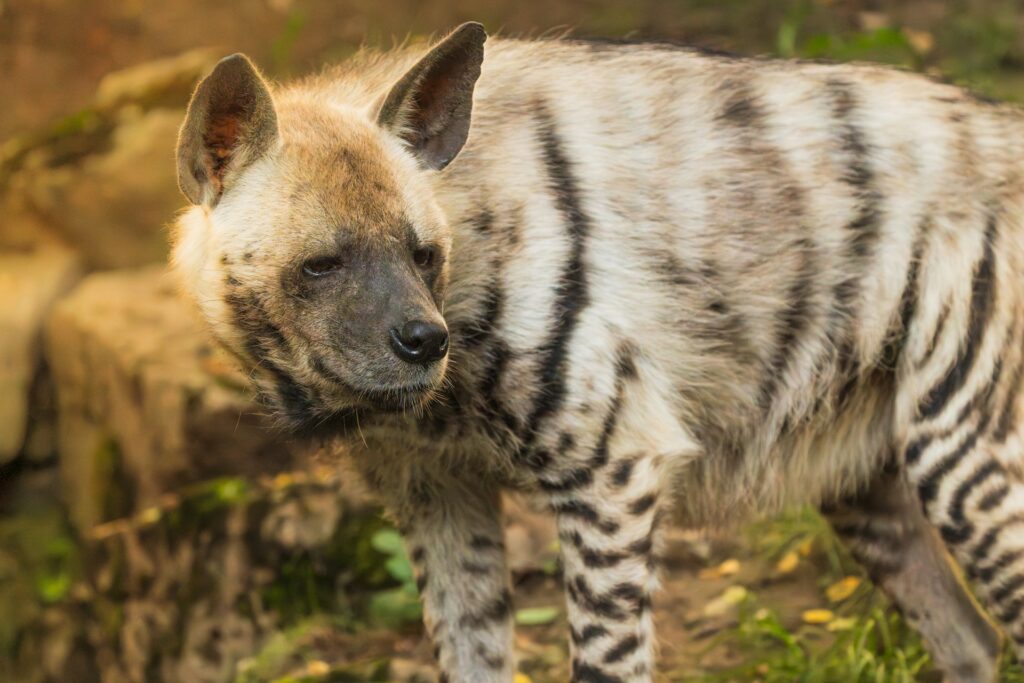
Striped Hyena and Nocturnal Wildlife
Striped Hyenas are present in Panna but are almost exclusively nocturnal and deeply wary of vehicles. They are scavengers that follow predator activity and are most likely encountered near carcass sites or dry riverbeds after dark. Some lodges outside the core park boundary offer night drives in buffer zones, where striped hyenas, porcupines, jackals, and jungle cats become more accessible. These drives cost approximately INR 1,500 to INR 2,500 per person depending on the operator, and they add a genuinely different dimension to the Panna experience.
Comparison: Key Wildlife Beyond Tigers in Panna
| Animal | Type | Best Zone / Location | Sighting Likelihood |
|---|---|---|---|
| Leopard | Mammal | Hinauta, Madla zones | Moderate to High |
| Gharial | Reptile | Ken River sandbanks | Moderate (seasonal) |
| Sloth Bear | Mammal | Rocky forest areas | Low to Moderate |
| Indian Vulture | Bird | Cliff faces, Ken gorge | Moderate |
| Chinkara | Mammal | Grassland edges | Moderate |
| Striped Hyena | Mammal | Dry forest, rocky terrain | Rare |
| Ken River Dolphin | Mammal | Ken River | Rare |
Practical Notes for Wildlife Viewing in Panna
The best time to visit Panna for overall wildlife diversity is from February to May, when deciduous trees shed their leaves, sightlines improve dramatically, and animals concentrate near water sources. The park remains closed during the monsoon season.
- Park entry fees vary for Indian and foreign nationals
- Boat safaris on the Ken River are available from select entry points and require prior booking
- Morning safaris begin at 6:30 AM approximately, evening safaris around 3:00 PM (seasonal variation applies)
- Jeep safari costs run approximately INR 2,500 to INR 4,000 per vehicle depending on zone and season
- Hinauta gate is the primary entry point for most core zone safaris
Panna rewards visitors who arrive with broader expectations. The park functions as a working ecosystem – predators, prey, raptors, and riverine species all occupying distinct but connected niches along the Ken River corridor.