Panna does not feel like Kanha or Pench.Here you drive through rocky plateaus, deep gorges, river valleys, and open scrub forest. The Ken River shapes the park’s ecosystem. Cliffs rise sharply in several zones, especially around Madla.
Birding in Panna often means looking up at cliff faces and scanning open sky.Raptors and vultures are stronger highlights here than in most other central Indian parks.Here are ten birds that truly define Panna.
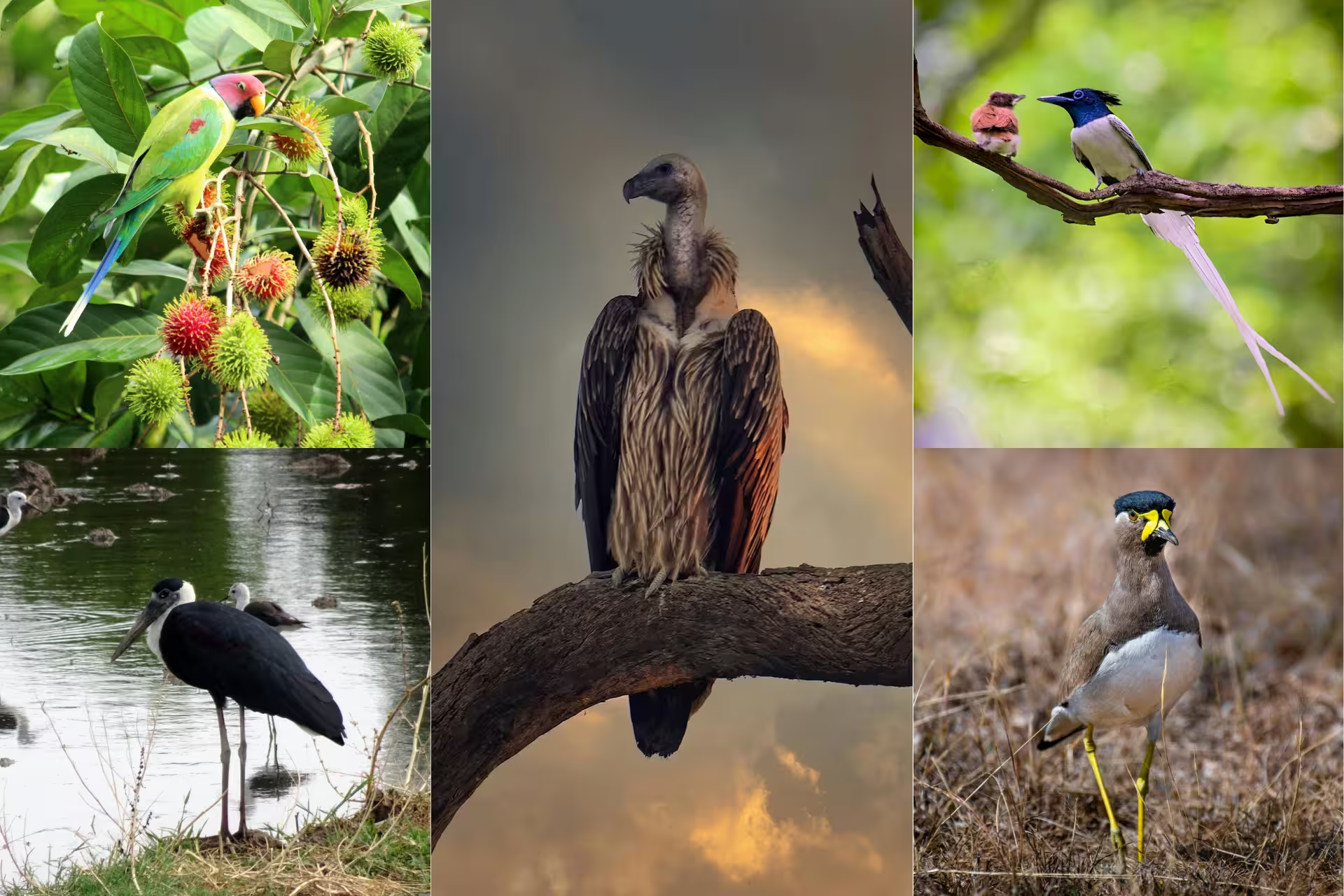
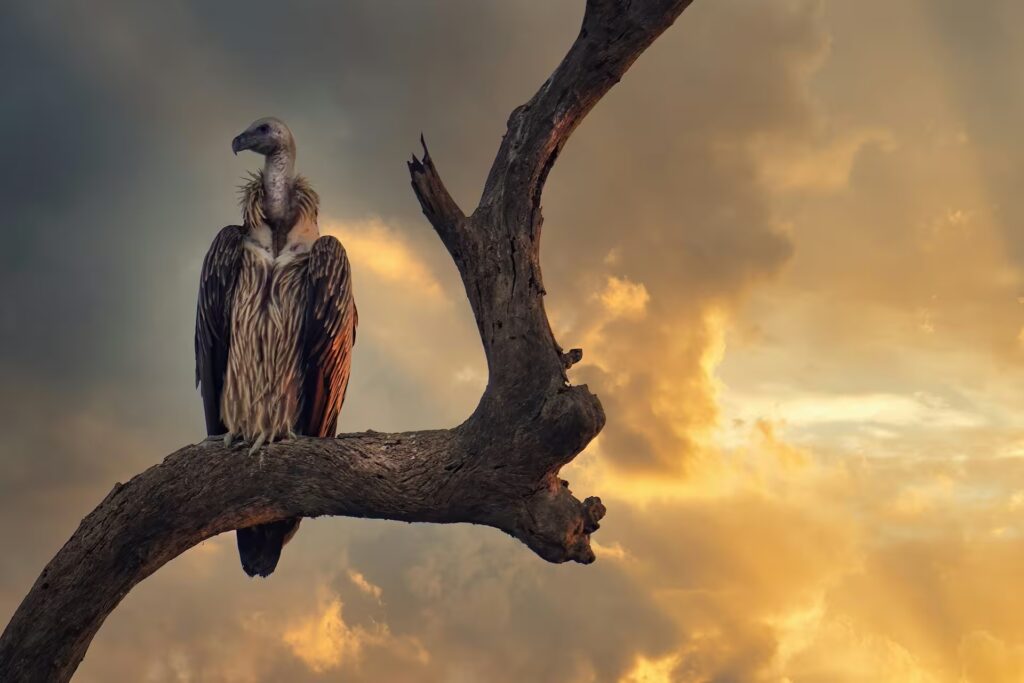
Long-billed Vulture
One of Panna’s biggest strengths. The cliffs along the Ken River support nesting colonies.You’ll often see them soaring above gorge areas or perched on rocky ledges. Early morning thermals increase activity.
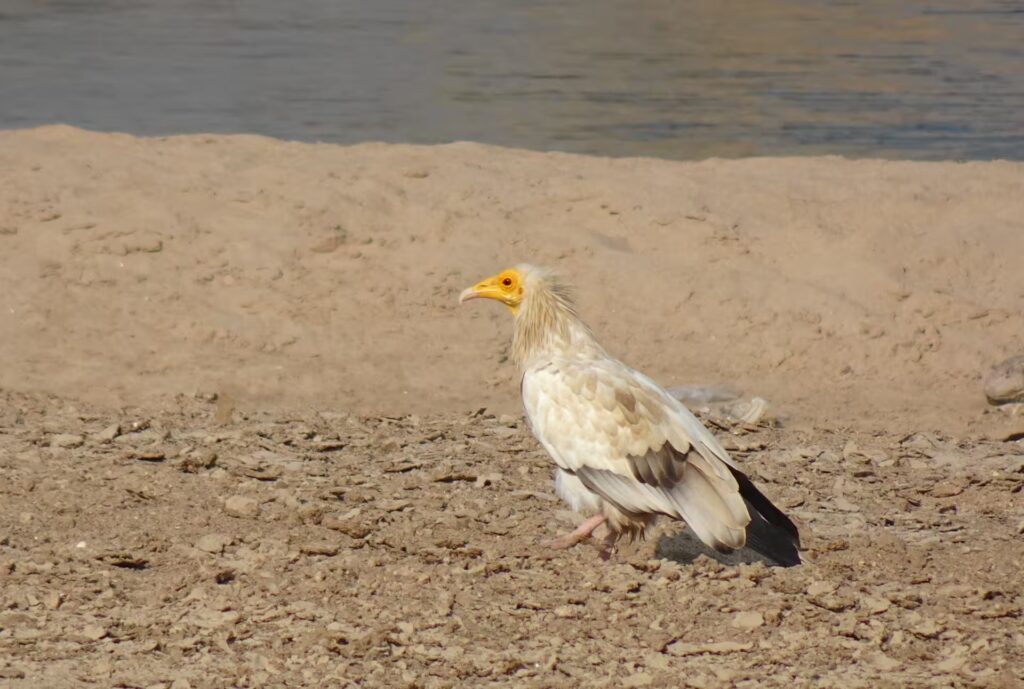
Egyptian Vulture
Smaller than other vultures and often seen gliding low over open scrubland and riverbeds.Its white body and black flight feathers make it visible from far away. Panna remains one of the better central Indian parks for consistent sightings.
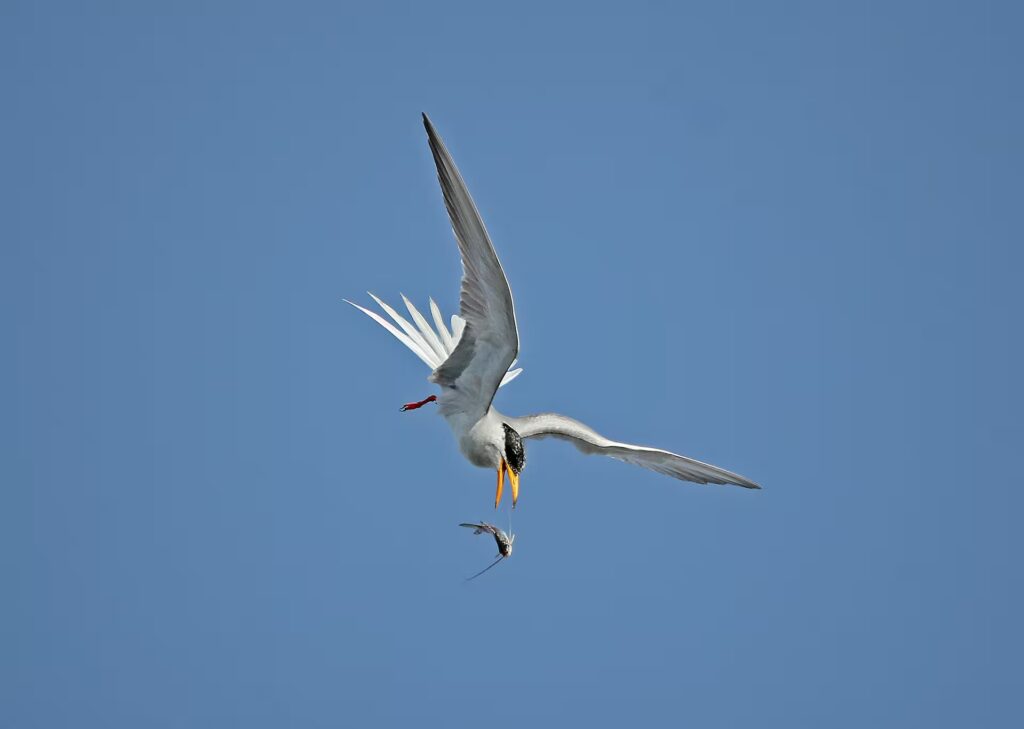
River Tern
Strongly associated with the Ken River. It skims the water surface before diving for fish.Best seen in winter and early summer when river levels are stable. Boat-based sightings (outside core safari routes) are sometimes productive.
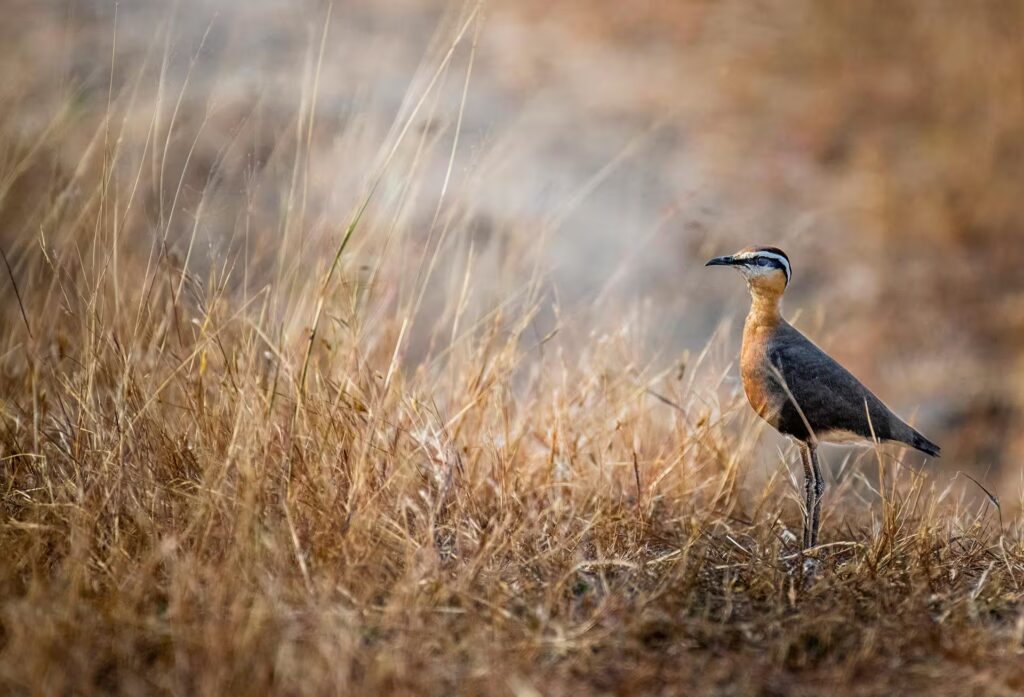
Indian Courser
Prefers dry, open, rocky terrain.More likely in buffer areas where scrub and sparse grass dominate. It runs swiftly across open ground and blends extremely well with soil colour.
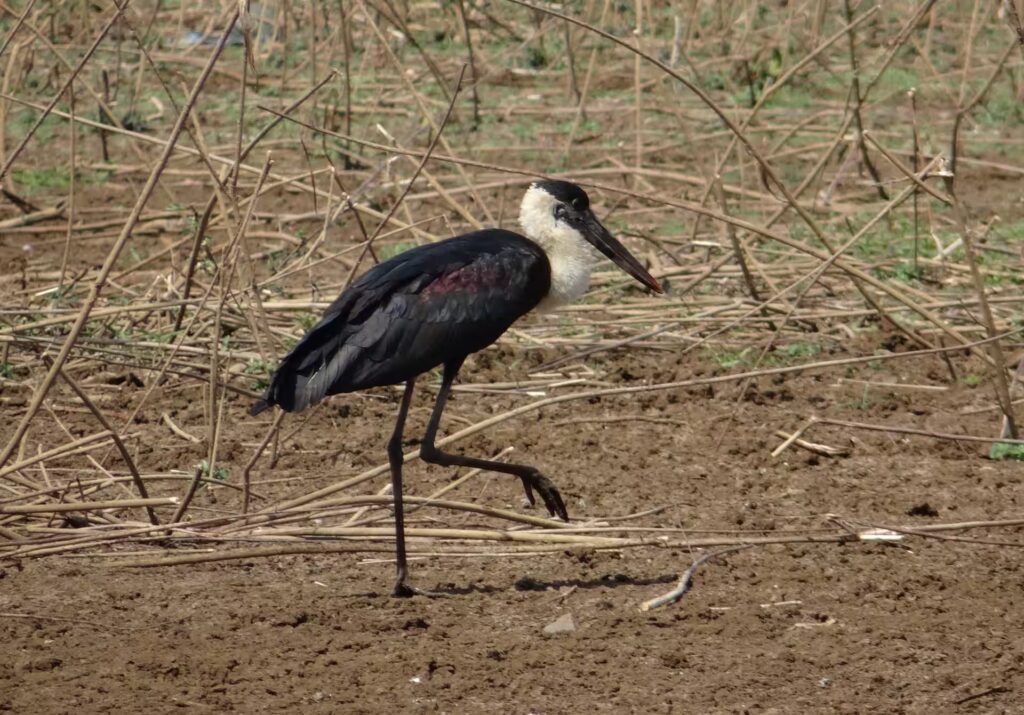
White-necked Stork
Seen near river stretches and shallow wetlands.Tall and striking with black-and-white contrast and red legs. Usually seen singly or in small numbers.
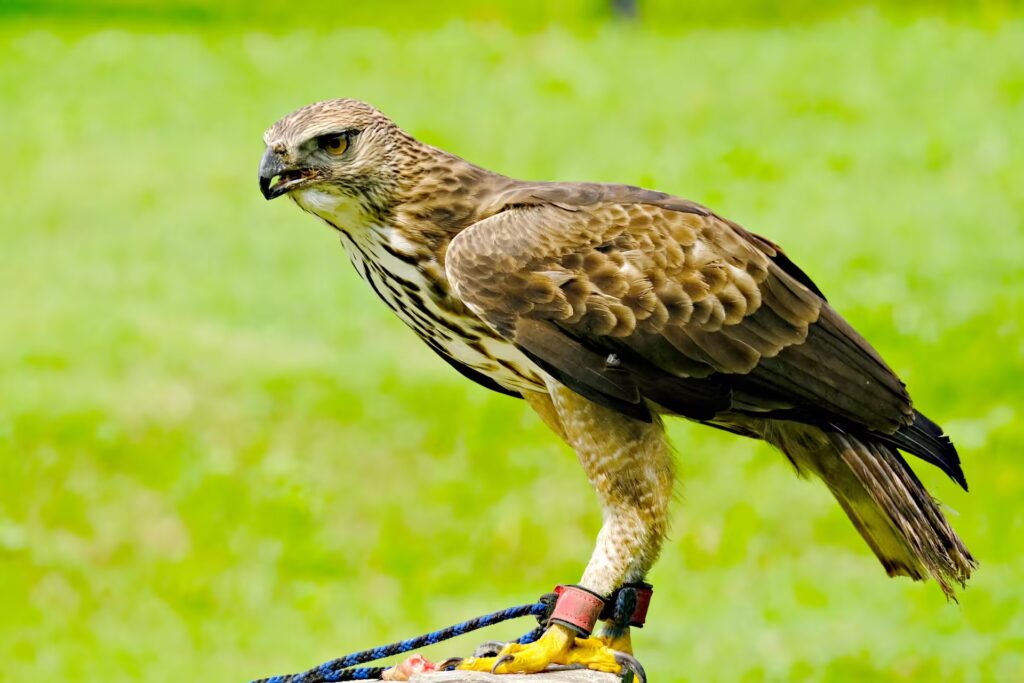
Changeable Hawk-Eagle
Uses cliffs and tall isolated trees for perching.More visible here than in dense forest parks because open terrain makes scanning easier.
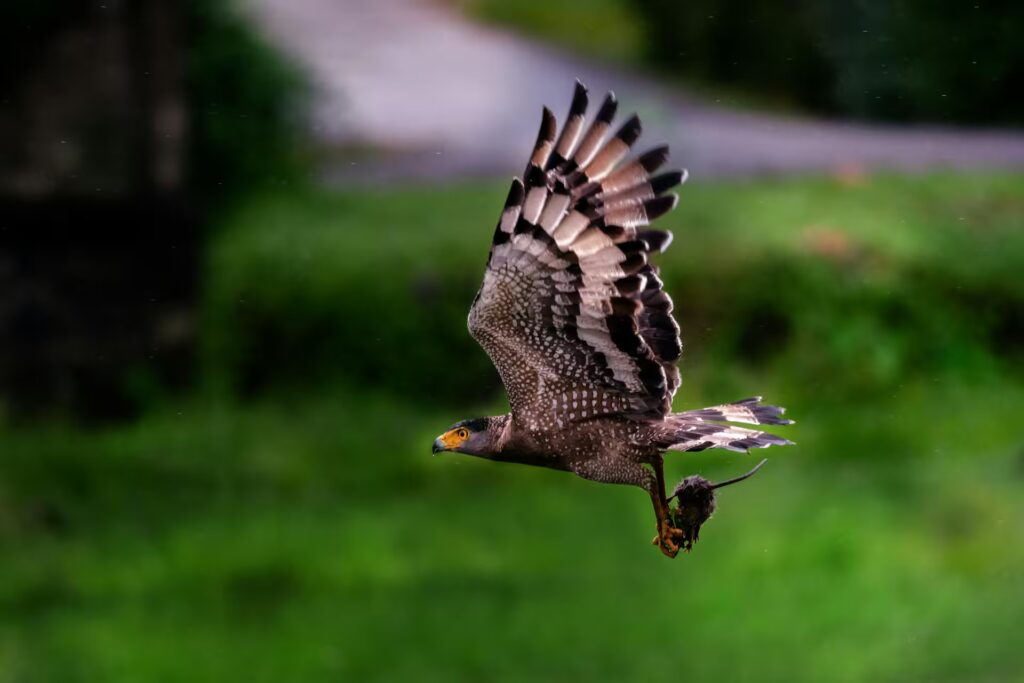
Crested Serpent Eagle
Common but often seen soaring against wide open sky instead of sitting deep inside forest canopy.Frequently spotted near rocky slopes and river edges.
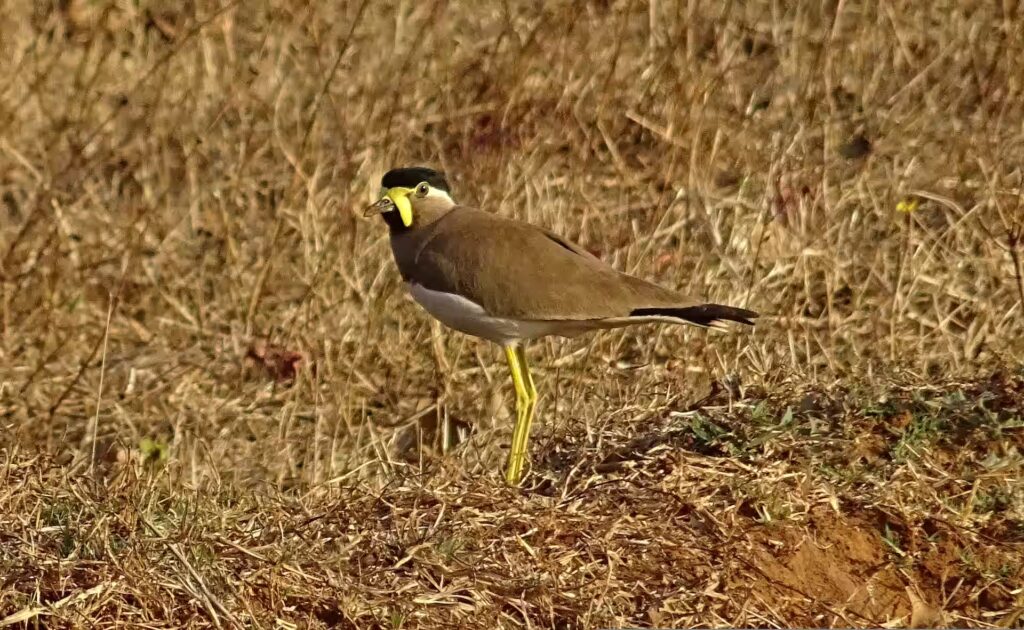
Yellow-wattled Lapwing
Ground bird found in open scrub and dry grass patches.Best spotted during summer when vegetation is shorter and visibility improves.
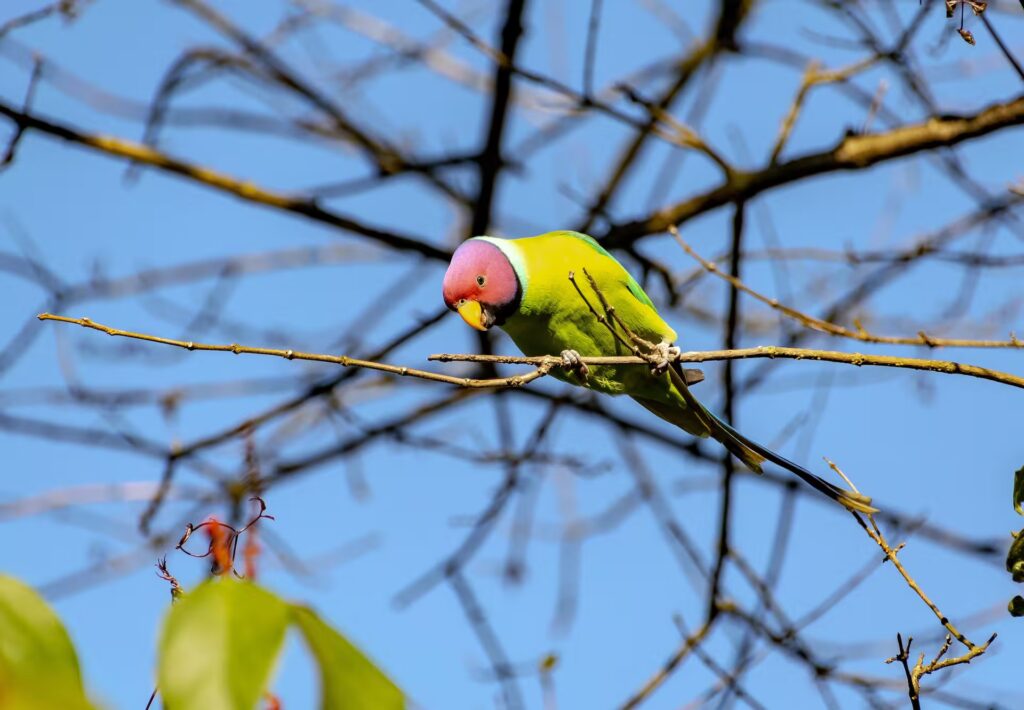
Plum-headed Parakeet
Found in wooded river patches and scattered tree cover.Seen in small flocks feeding quietly in treetops.
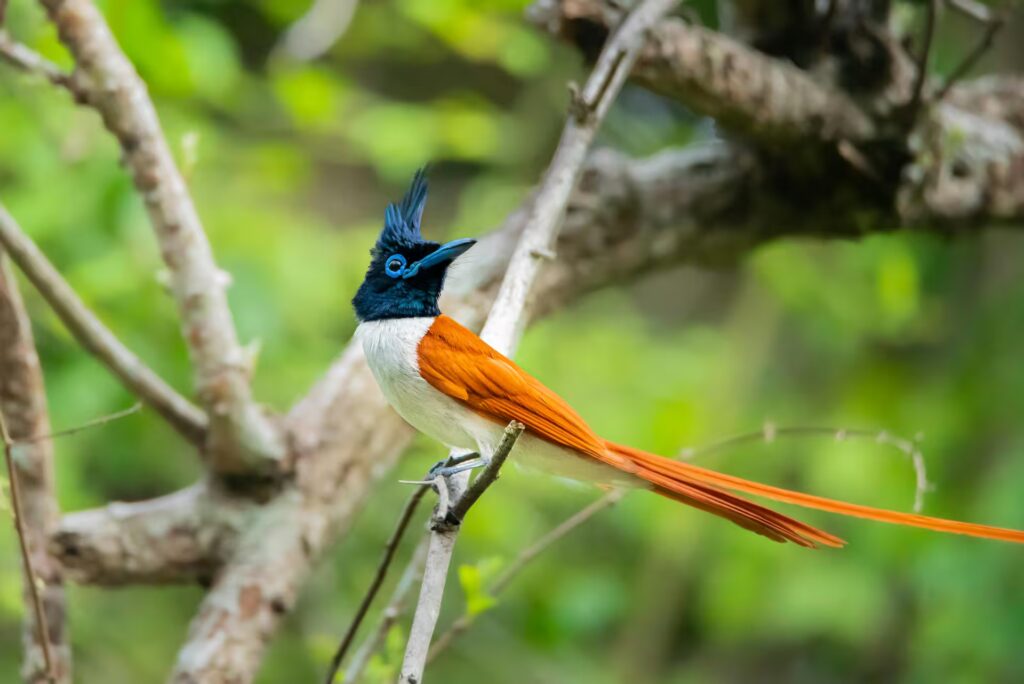
Asian Paradise Flycatcher
Seen near shaded river stretches and water sources.Summer increases activity, especially in quieter forest pockets near the river corridor.
What Makes Birding in Panna Different?
Panna birding is shaped by:
- Cliffs and escarpments
- Deep river gorges
- Open rocky plateaus
- Ken River ecosystem
Compared to Kanha:
- Less meadow-focused
- More cliff-nesting species
- Strong vulture presence
Compared to Pench:
- More dramatic terrain
- Greater raptor and scavenger visibility
- Less teak woodland
Birdwatching here feels wide, open, and sky-oriented.You spend more time scanning ridgelines and cliffs than treetops.
Best Time for Birdwatching in Panna
- October to March – Best overall diversity
- Winter – Migratory river species increase
- Late winter to early summer – Strong vulture activity
Morning safaris remain most productive.
Practical Birding Tips for Panna
- Always scan cliff edges carefully
- Watch sandy riverbanks
- Carry binoculars suited for long-distance viewing
- Ask guides about active vulture nesting zones
Core zones like Madla and Hinouta often pass through prime raptor areas.
Final Thoughts
Panna stands apart because of its terrain.If Kanha is meadow-based and Pench is river-woodland driven, Panna is cliff and gorge dominated. Raptors and vultures become the real highlight here.